Further reading — Module 02
Near misses aren't accidents
Two cherries on the payline and a third one hovering just above it. Nothing was won. Yet the brain reacts as though something almost was — and that reaction is exactly what the machine was built to produce.
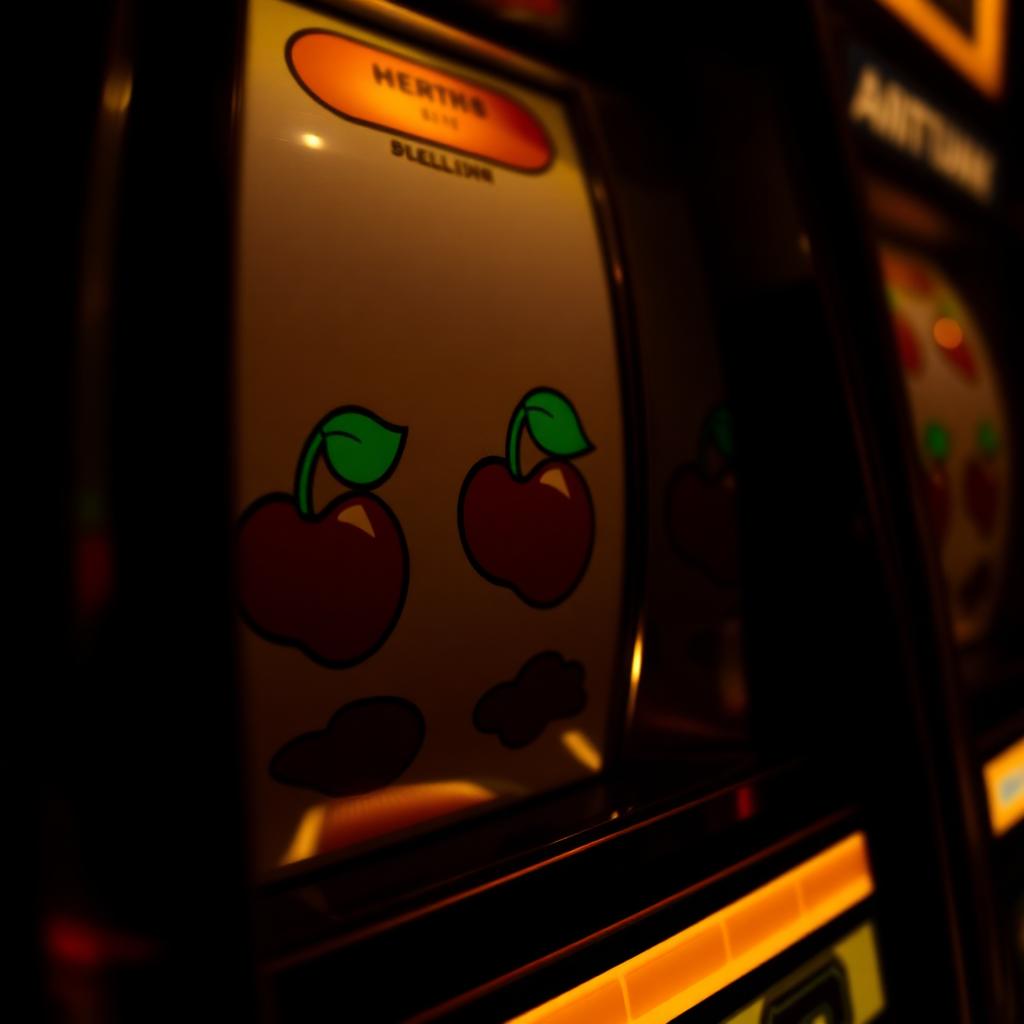
A near miss is a loss that looks like an almost-win. The two matching symbols line up. The third one stops a fraction of a turn short. In pure mathematical terms it is identical to any other losing spin — the payout is zero. In neurological terms it is something else entirely.
What the brain does with an almost-win
Brain imaging studies of gamblers show that near misses activate the same reward pathways as actual wins. Dopamine releases. The striatum lights up. The player feels a small surge of anticipation and a stronger urge to play the next spin — despite having lost money on this one.
The mind interprets "almost" as a signal that a win is close. It isn't. Every spin is independent, the outcome fixed by a random number generator the instant the button is pressed. The near miss is not evidence of progress. It is a coincidence the brain has been evolutionarily primed to read as one.
Why they aren't accidents
Modern slot reels — physical or virtual — are weighted so that high-value symbols appear on the payline less often than they appear just above or below it. The near miss is more common than a random distribution would produce. Regulators in several jurisdictions have investigated and, in some cases, restricted the practice, precisely because it is engineered rather than incidental.
The same pattern shows up beyond slots. A roulette ball that lands one pocket away from your number. A blackjack dealer busting on the next card after you've already stood. A scratchcard revealing two of three jackpot symbols. Each of these produces the same neurological response — and each keeps the next bet closer at hand than the last one.
Final thought
Next time the reels stop one symbol short, will it feel like a near win? Or will it feel simply like a programmed loss? Now that you know where it comes from, will it still feel the same?
Share this page
Further reading in Module 02